
How to Talk About Minnesota and ICE
Some thoughts on discussing the issue dominating the discourse

This is one of those rare moments when everyone is paying attention to the same thing. If you open social media or throw on a podcast, even influencers and hosts who assiduously avoid politics are talking about what happened in Minnesota. Celebrities and athletes who stopped posting about politics after 2020 are once again using their platforms.
Polling conducted over the last few days shows that three-quarters of Americans have seen some or all of the video of the murder of Alex Pretti. Numbers like these are stunning in our highly disaggregated media environment, where consumers are increasingly served only the content algorithms curate for them.
It’s unlikely this attention fades anytime soon.
Barring a legislative miracle, much of the federal government will shut down on Friday because Republicans are unwilling to rein in Trump’s out-of-control deportation force.
You can’t persuade people without their attention—and getting people’s attention is the hardest thing to do in politics right now. Well, we have it. If your experience is anything like mine, your less-political friends and family are talking about Minnesota and ICE. It’s coming up organically at school pickup and at work. People who have never posted about politics before are sharing content about the killings.
This is a rare opportunity to reach people who have checked out of politics in recent years—or who broke with Democrats and voted for Trump in 2024 out of frustration with Biden and rising costs—and help them understand the damage being done to the country.
Here’s my best advice on how to talk about Minnesota, ICE, and where we go from here, based on experience and internal polling circulating among Democratic operatives and elected officials.
Message Box exists to help you talk to the people in your life — from your MAGA-curious uncle to your apathetic cousin — about politics and the news. If you find this post helpful, please share it far and wide.
These sorts of posts will always be free to everyone. If you want to support this work, please become a paid subscriber
1. State of Play
Just to provide some context for how Americans are interpreting the events of recent weeks:
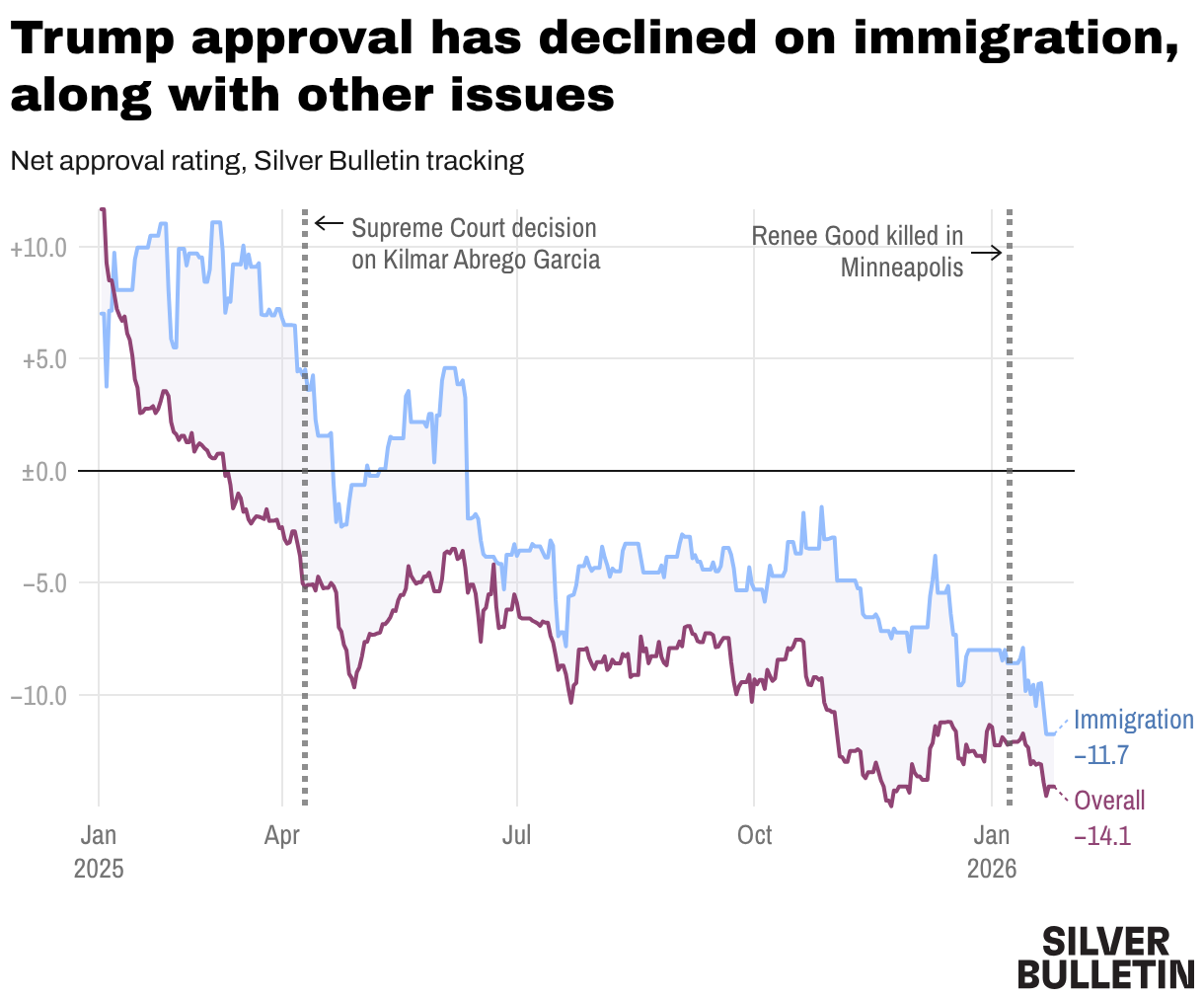
Trump’s approval on immigration has declined steadily since the beginning of last year, but the drop has been far more pronounced in recent weeks as ICE has ramped up operations in Minnesota, Maine, and elsewhere. You can see the trend in this chart from Nate Silver:
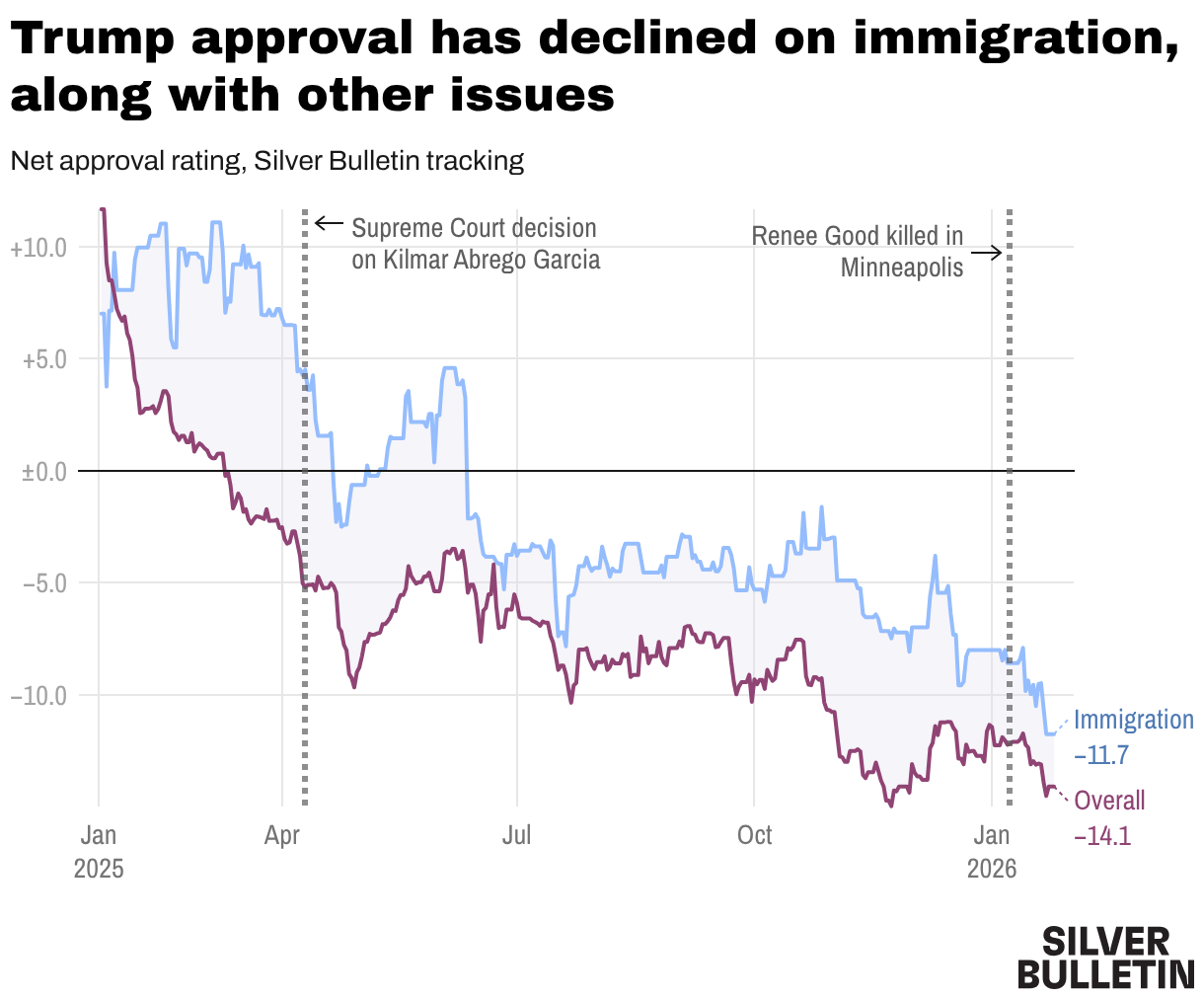
As Silver notes, Trump’s approval on immigration had typically run several points above his overall job approval. Those numbers are now virtually the same, a clear sign that immigration is no longer a strength for him.
In a New York Times poll conducted before Pretti was killed, 63% disapproved of ICE’s actions, and 61% said ICE has gone too far.
Approval of ICE is down roughly 30 points over the last year.
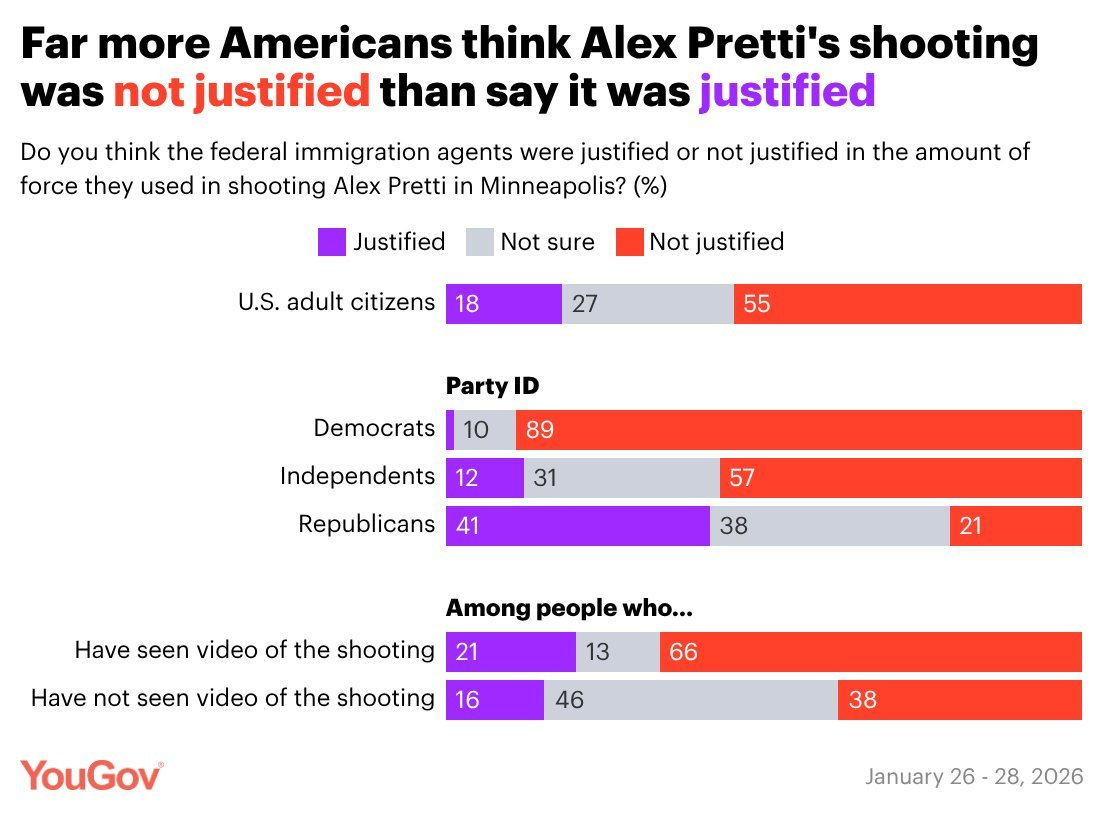
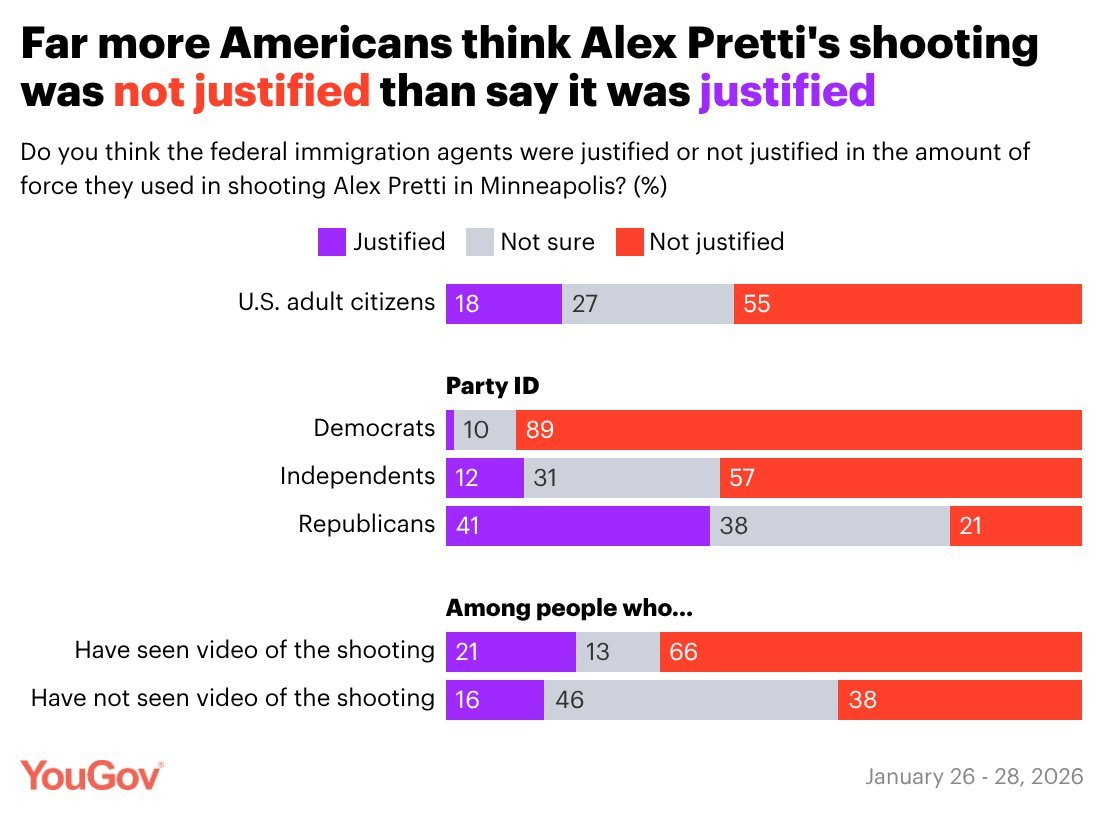
Voters believe the killings of Renee Good and Alex Pretti were unjustified and reject the Republican narrative that they were domestic terrorists or assassins.
Despite all of this, voters still trust Republicans over Democrats on immigration by about 7 points—down from earlier this month, but still notable. Voters dislike what Trump is doing, but remain skeptical of how Democrats would handle the issue, a hangover from the Biden era.
This polling tells us two important things. First, immigration is no longer an issue Democrats should fear engaging on. What was once Trump’s silver bullet is on the verge of becoming his Achilles’ heel. Second, our persuasion targets start from a place of skepticism about Democrats generally—and, in particular, about immigration.
2. Focus on What People Don’t Like
Here are arguments that resonate across the political spectrum:
Too Much Chaos: Multiple message tests show the most effective persuasion tool is simply video of what’s happening on the ground. Heavily armed, masked ICE and Border Patrol agents assaulting unarmed people, firing tear gas and sound grenades in American streets—these images feel profoundly un-American. This is especially damaging for Trump, who ran as a strongman promising to end “chaos” at the border. Instead, he brought the chaos inland.
ICE Is Masked, Unaccountable, and Untrained: When people see these videos, they see poorly trained officers acting as if they are above the law. The masks are a powerful symbol of that unaccountability—reinforced by the administration’s reflexive response to the killings: attacking the victims and defending the shooters.
It’s Unconstitutional: Multiple polls show voters believe ICE agents should be required to obtain judicial warrants before making arrests or searching homes.
ICE Is Targeting the Wrong People: If you watched every minute of Trump’s rallies, you knew he planned a mass deportation campaign. But if you casually followed the news, saw the debates, or watched his ads, you likely thought he would focus on criminals, drug traffickers, and recent border crossers. That is not what is happening. ICE is sweeping up people who have lived here for years, are married to U.S. citizens, are parents of U.S.-born children, people here legally—and even U.S. citizens. This is not what voters signed up for, and they are getting angry.
3. The Wrong Priorities
Another argument that tests extremely well is explaining where all the money for ICE comes from. I don’t think people have fully internalized how much we are spending on immigration enforcement. As Caitlin Dickerson wrote in The Atlantic:
The more than $175 billion that Congress handed to the nation’s immigration enforcers when it passed the One Big Beautiful Bill Act is larger than the annual military budget of every country in the world except the United States and China. Immigration and Customs Enforcement—just one component of the Department of Homeland Security—is getting more money than any other law-enforcement agency in America.
That is fucking bananas. Especially at a time when we’re cutting funding for health care, cancer research, education, and nearly everything else—while boosting ICE, the military, and tax cuts for billionaires.
Messages that link ICE’s ballooning budget to cuts in health care and other priorities are incredibly persuasive. More Democrats should be making this case, as Alexandria Ocasio-Cortez does in this video.
Why are your Obamacare premiums going up? ICE.
Why is the rural hospital in your town closing? ICE.
Why can’t people get health care or food assistance? Because we’re deploying thousands of heavily armed, poorly trained agents to terrorize American communities.
4. What We Would Do Differently
The MAGA message is that there are only two options: what we’re seeing in Minnesota or no immigration enforcement at all. That’s obviously absurd.
There is a broader conversation to be had about what Democrats would do in power—whether ICE should be fundamentally restructured, relocated, or replaced. But if pressed on what Democrats would do right now, here are reforms that are both substantively sound and broadly popular:
Require judicial warrants before arrests or home searches
Ban masks and require agents to be clearly identified
Mandate body cameras
Apply the same use-of-force standards to ICE and CBP that govern agencies like the FBI
These are basic, common-sense guardrails—many supported by law-enforcement professionals themselves. Trump and Republicans are rejecting them because they want ICE to remain unaccountable and above the law.
People are paying attention. Theier minds are open. They don’t like what they are seeing. This is a moment where we can convince them that there is a better way forward.
Why don't the Dems insist on requiring the recission of Miller's 3000 arrests per day? This NKVD requirement has accelerated the chaos and cruelty of the malicious program beyond all measure.
Love the one two punch of your healthcare costs are going up to pay for ICE and CBP raids. More visceral then the ballroom. More accurate as well given the private funding for the ballroom.